Showing posts with label possessive apostrophe. Show all posts

Tuesday, 20 October 2015

Apostrophe catastrophe, # 98

This heinous and nonsensical grammatical error is becoming ubiquitous:

Link: BBC News, ‘Ancestors “had less sleep” than we do’

The comparison is not, as the construction of the final subordinate clause above suggests, between modern people’s lifestyles and ancient hunter gatherers, but between modern people’s lifestyles and the lifestyles of ancient hunter gatherers, which thus requires an apostrophe after ‘gatherers’.
lifestyles closely resemble ancient hunter gatherers [no apostrophe]

Friday, 9 October 2015

Apostrophe catastrophe, # 96

The charity formerly known as Citizens’ Advice Bureau has apparently been rebranded and eschews possessive apostrophes in its name, which rather implies uncertainly about the number of citizens it is willing to aid:

Link: Citizens Advice

Elsewhere (Rugby, in this case), nonsensical pre-rebrand signage sidesteps the apostrophe problem entirely:

Citizen Advice Bureau

Friday, 7 August 2015

Double-take, # 175

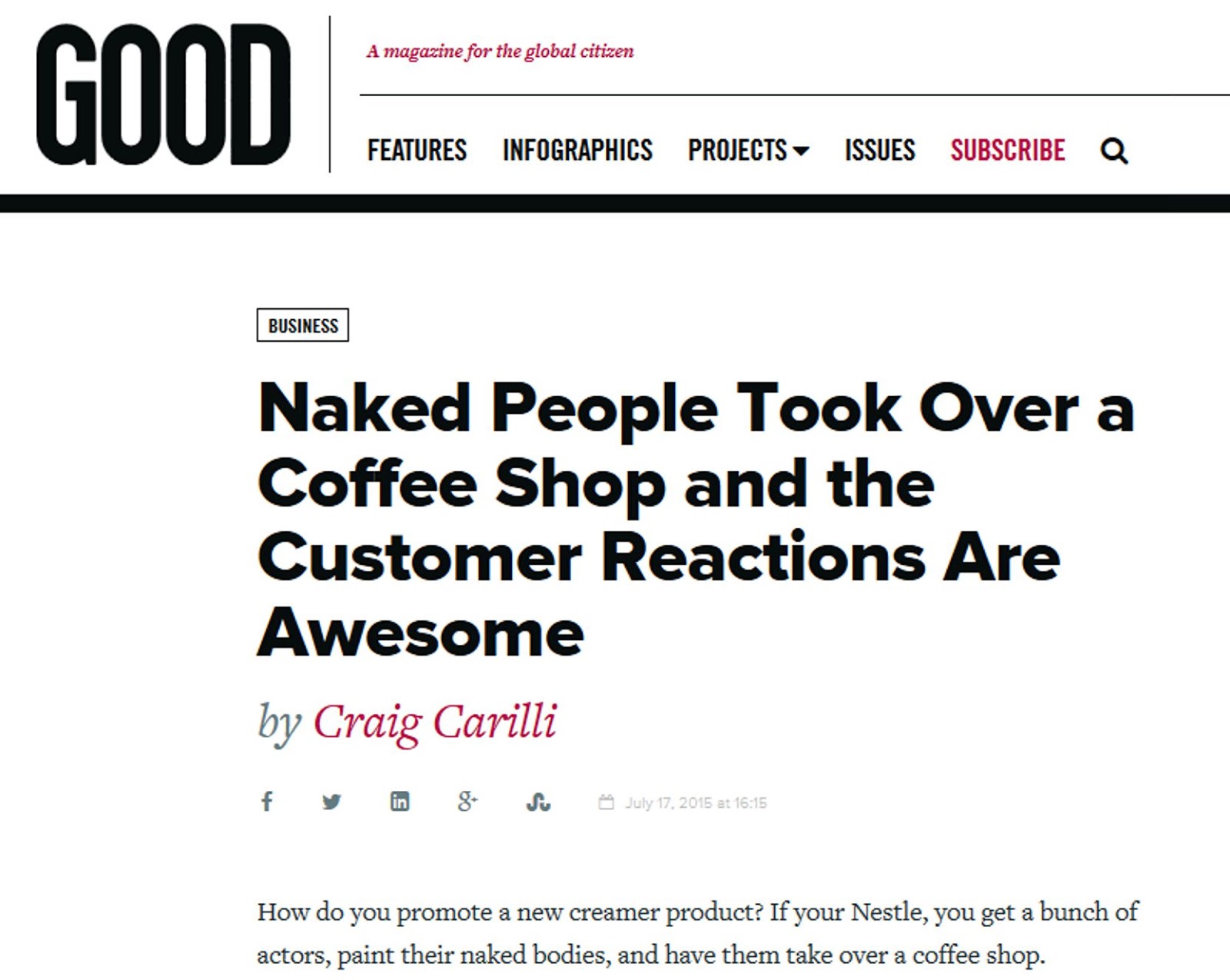
Dr Faustus has submitted this for the grammatical hideousness in the ‘If’ clause (actually not one, since it lacks a verb; it has now been corrected). However, since the item comes from ‘a magazine for the global citizen’, not a dedicated marketing publication, the jargonistic phrase ‘Customer Reactions’ seems inappropriate, as well as ungrammatical: the relation between the nouns should be shown by a possessive form. The opening paragraph revisits the ‘Nestlé problem’ mentioned earlier this week:

Link: Good, ‘Naked People Took Over a Coffee Shop […]’
your for you’re; ‘Customer Reactions’; Nestle for Nestlé

Tuesday, 4 August 2015

You Cannot Be Serious, # 49

Dr Faustus observes that the BBC seems to be suffering from inconsistency in relation to a company name in this report, shifting between plain and possessive forms (the latter being incorrect). I’m inclined to add, forty-two years on from the UK joining the EEC and twenty-two years into its EU membership, that it is high time the British press learned that the final letter of Nestlé takes an acute accent — if other nations’ print and web media can accommodate diacritical marks, why can‘t the UK’s? Most companies, these two included, have an Internet presence nowadays, so there can be no excuse for not checking and using their correct names. There’s also a typographical error resulting in the wrong word (which a spell-checker wouldn’t find, but proofreading would, or should). Yet another mangle here is the omission of a possessive in the first line of the second paragraph, which refers specifically to the opinion of the presiding (and correctly unhyphenated) advocate general (compare ‘the judge’s opinion’ rather than ‘the judge opinion’) and not, as it is made to seem here, a particular kind of general opinion:

Link: BBC News, ‘Nestle faces setback in KitKat trademark battle’
Cadbury & Cadbury’s; Nestle; advocate-general opinion

Saturday, 28 February 2015

Double-take, # 137

Ugly grammar:

Link: The Guardian, ‘Police from several UK forces seek details of Charlie Hebdo readers’

Since the customer is deemed human (‘who’), why not the newsagent? (Compare butcher, baker, candlestick-maker &c.) The relative pronoun ‘that’ would be correct were the writer referring to the business, but in that case ‘newsagent’ would need to take the possessive form — ‘a newsagent’s that’ — in which the possession, ‘shop’, is idiomatically omitted.
a newsagent that

Friday, 14 February 2014

Spellchecking Is Never Enough, # 111

Exhibit A was found in an email from House of Fraser on 7 February 2014. Unfortunately, although an apostrophe is inserted where there should be one, and none where there shouldn’t, the message seems not to have been proofread:


Exhibit B is a double-page spread in the Rugby Observer, in which the newspaper’s headings omit the apostrophe, as do most of the advertisers (and note the bonus Mothers Day), although the hotel wins kudos for using the possessive correctly:

Link: Rugby Observer, 6 February 2014, pp. 14-15

In case it’s too small to see properly (a zoom function is available on the publication’s website if you want a closer look), highlights include the bet-hedging wedding venue that has some-with-and-some-without, and the pub that recasts 14 February as ‘Valentine Day’, presumably in order to avoid the pesky apostrophe issue entirely.

As far as I can see, there’s not a single reference to the saint for whom the day is named…
you boudoir; Valentine Day; Valentines Day; Mothers Day

Friday, 25 October 2013

Friday, 9 August 2013

Apostrophe catastrophe, # 14

Two recent examples of a common error:


There are further punctuation issues (notably, but not exclusively, in the second extract), but the key point here is that both sentences lack the apostrophes required in ordinary possessive constructions. The former, discussing ‘the difference of thousands of pounds’, should be thousands of pounds’ difference; and the latter should transmit ‘the worth of thousands [of pounds]’ as thousands’ worth of products.

Monday, 22 July 2013

Apostrophe catastrophe, # 16

Here’s a sentence from the Android version of a BBC News article:


It’s correct in the online version, whose update time is identical to that of the Android post. Other than the position of the apostrophe, the posted sentences are identical, suggesting that someone has deliberately moved the apostrophe during the editing process, either from the incorrect to the correct position or vice versa. I don’t know the procedure (anyone able to offer enlightenment?), but I’d guess that the Android version is edited down from the online text.… in which case: ouch.

Wednesday, 8 May 2013

Saturday, 6 April 2013

Apostrophe catastrophe, # 7

No, Daily Telegraph staff, you can't simply miss out some words from the headline so it fits on the News Index page and assume the grammar will still work, as is clearly shown when you start with this:


and cut it down to this:


Thursday, 21 March 2013

Apostrophe catastrophe, # 6

Bob Godiva contributed today's mangle, which had done the rounds in 2007 from the point of view of its unfortunate ambiguity, although no-one seems to have considered its appalling grammar or how that added to the ambiguity problem:


It's an issue that appears to arise with the informal, but sadly ubiquitous, term kids,* as this example from the bet-hedging Walmart rather emphasizes:


The term children, conversely, can be given a possessive apostrophe easily and accurately, as shown on the Constructive Playthings website:


Perhaps Kohl's, whose name suggests appreciation of the importance of apostrophes, should have chosen the more formal term in order to avoid inconsistency, a grammatical error and, given the grammatical issues, what turns into a potentially ambiguous statement:


Many, many more examples exist…

 * The OED finds this term in use in English as early as 1642, and notes that it was 'Originally low slang, but by the 19th c. frequent in familiar speech'. In the early nineteenth century, it was also used 'In low sporting or criminal circles [as a] term of admiration for an expert young thief, pugilist, etc.' In the UK, goat occurs in various metaphors, most of which relate to being foolish or behaving foolishly, which makes the ubiquity of kids even more puzzling.

Let's ignore the syntactical illogicality of the product-type listing beneath 'expect great things'. 

Note: since the starting point, Target, is a firm operating in the USA, all of today's examples come from North American sources. This is not to say that firms in the United Kingdom or in other English-speaking places couldn't easily supply examples just as good/bad…

Wednesday, 6 March 2013

Apostrophe catastrophe, # 4

This is the footer from the homepage of the English version of 'the official website of the Parc Asterix':*


I wish there'd been a character called Grammatix to evoke at this moment!


* Shouldn't that be Astérix? If you're a fan, have a look round the site; I don't know if there are more errors, but there's some interesting content, including pages on translations of the stories, though not enough have their own pages (Hebrew, Latin, Greek variants, Creole variants, and Picard do) if it's true that the books have been translated into more than 107 languages and dialects― more examples, please!