Sunday, 31 March 2013

Spellchecking Is Never Enough, # 45

A little extra one for Easter.

The Wiki site Answers.com seems to contain a lot of very basic questions marked by incorrect spelling and capitalization. Here's a topical exchange from the site:


The answer isn't much better, and contains a major grammatical ouch:


The type of errors in presentation on the site sometimes make me wonder if the entries have been fabricated, but then I'm a tad cynical…

Spellchecking Is Never Enough, # 44

Facebook posted this on my timeline yesterday:


When I clicked through to the article, the Independent had corrected it…

Saturday, 30 March 2013

Double-take, # 4

Bob Godiva has contributed this barely credible example of Chrome shooting itself in the foot (which I've edited slightly so the text can be seen more easily):


Late last month, in the Google Chrome Blog, someone styling herself 'Rachel Petterson, Software Engineer and Savvy Speller' announced the browser's new spell-checking tool. The post's URL and title make it clear that the misspelling is deliberate:


The Chrome team clearly assumes that users of its browser will instantly understand 'bettar spell chek' as intentional and that they all have a similar sense of humour.* However, various comments across the Internet show that not everyone does appreciate that these 'errors' are deliberate and/or intended to be amusing. Some people have castigated Chrome for carelessness. Some noticed only the 'bettar', not the 'chek', and thus didn't realize it was deliberate. In one exchange on a Google productforums page last Wednesday, someone promised to pass a user's irate complaint 'onto the correct team', and thus appeared to be a Google employee who had missed the point.

Unsurprisingly, the joke doesn't travel very well across cultures. Although Petterson's announcement specifically refers to support for non-English languages, the Chrome team seems unaware of the inherent issues in dealing with a multinational audience: for instance, you have to be fairly advanced in a foreign language to recognize and appreciate grammatical jokes.

Perhaps it would have been more obvious had the Chrome team misspelt spell as well; but, in the context of the widespread laxity in spelling and presentation on and off the Internet, the tag simply seems ill-judged.


* Also perhaps that they will avidly be reading every blog post ― who has the time?
‡ An exchange on a different Google productforums page two days later suggests that he has had it explained it to him and been put in charge of explaining it to other people…

Friday, 29 March 2013

Not Washed or Cooked, # 16

The Pope's homily at the Holy Thursday Mass of the Chrism yesterday was reproduced by the online Catholic Herald. The preamble ― presumably not written by Pope Francis, even though he alone is credited in the byline ― offered a summary and a duplicated mangle:


Spellchecking and proofreading are clearly not encouraged at the Catholic Herald. There's also a failure to harmonize quotations from the homily, resulting in a confused final paragraph:


Since 'Pope' is the only singular noun preceding the pronoun, the comment implies that some priests may become dissatisfied by the Pope's negative qualities…

Thursday, 28 March 2013

Spellchecking Is Never Enough, # 43

This review from PC Advisor, contributed by Ben Flaze, demonstrates an arbitrary usage of its and it's. The texts starts well enough:


and it's clear the writer knows the difference between its and it's:


However, through much of the article, it's and its are used randomly:


Wednesday, 27 March 2013

The Wrong Word Entirely, # 3

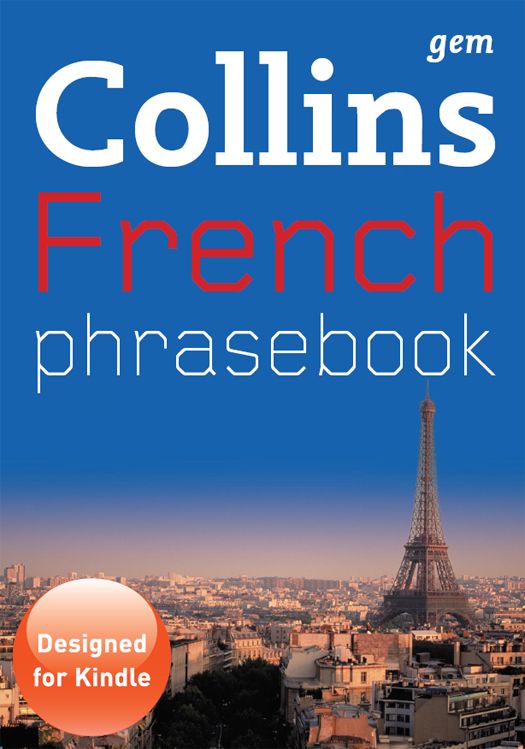
Let's hope the rest of this:


is better proofread than this page:


There seems to be no copyright page in the Kindle version, but the information on the Amazon page identifies this as the third edition of 2011. The 'Pronouncing' section is actually what loads when you click on 'Look Inside' (try it via the link above, and wait for a moment or two for it to load the main page and the the 'Look Inside' popup), so someone should have noticed ― and corrected ― it by now. Shame on you, Collins Gem!

Tuesday, 26 March 2013

Spellchecking Is Never Enough, # 42

Today's mangle is taken from a book which is rather dogged by typographical errors:


Refection, of course, is connected with refreshment and nourishment, so this unfortunate error might (depending on the reader) evoke anything from an image of nail-nibbling to a much less innocent suggestion of autoeroticism performed by someone extremely flexible…Either way, it should have been proofread out of the text before publication.


Sunday, 24 March 2013

You Cannot Be Serious, # 15

Last week's Rugby Observer surpassed itself with ambiguous headlines. Today, we'll feature this one:


In case you're wondering, the website is actually offering information about sex and relationships to teenagers…

Saturday, 23 March 2013

The Wrong Word Entirely, # 2

After a couple of months' contemplation, I still can't decide whether this is accidental or deliberate:


Even with the 'well' removed, or allowed through as innocent, the tagline makes little sense…

Friday, 22 March 2013

Not Washed or Cooked, # 15

I've been thinking on and off about Sky television's interface and its content. While the programme summaries are sometimes a little strange, they tend not to include errors of grammar or spelling. I don't know where or how the information is derived or sourced, but I'm assuming some kind of database is involved, and a little research suggests that databases either come with spell-checking code built in (such as Microsoft's Access) or can have code written in or added to check the spelling of input text (as for MySQL).

Presumably, the BBC uses a different method to compile data for its iPlayer. It would seem that either the system lacks spell-checking functionality or that the instructions to the BBC's operators do not incorporate a routine for editing, checking and proofreading:


The episode is actually called (as one might expect):


It's especially heinous to have errors published in material for children: not only can erroneous spellings too easily be learnt, but it's also communicating the message that bad habits, such as carelessness, are acceptable.

Thursday, 21 March 2013

Apostrophe catastrophe, # 6

Bob Godiva contributed today's mangle, which had done the rounds in 2007 from the point of view of its unfortunate ambiguity, although no-one seems to have considered its appalling grammar or how that added to the ambiguity problem:


It's an issue that appears to arise with the informal, but sadly ubiquitous, term kids,* as this example from the bet-hedging Walmart rather emphasizes:


The term children, conversely, can be given a possessive apostrophe easily and accurately, as shown on the Constructive Playthings website:


Perhaps Kohl's, whose name suggests appreciation of the importance of apostrophes, should have chosen the more formal term in order to avoid inconsistency, a grammatical error and, given the grammatical issues, what turns into a potentially ambiguous statement:


Many, many more examples exist…

 * The OED finds this term in use in English as early as 1642, and notes that it was 'Originally low slang, but by the 19th c. frequent in familiar speech'. In the early nineteenth century, it was also used 'In low sporting or criminal circles [as a] term of admiration for an expert young thief, pugilist, etc.' In the UK, goat occurs in various metaphors, most of which relate to being foolish or behaving foolishly, which makes the ubiquity of kids even more puzzling.

Let's ignore the syntactical illogicality of the product-type listing beneath 'expect great things'. 

Note: since the starting point, Target, is a firm operating in the USA, all of today's examples come from North American sources. This is not to say that firms in the United Kingdom or in other English-speaking places couldn't easily supply examples just as good/bad…